Bring brand resources together.
Logos, fonts, colours, templates and rules live in one place. The portal helps people find resources; the workspace uses them to compose.
Templates use the typefaces, colours and components in this library.
 Personal project / Evolving product
I design and develop Graphist to bring brand files, briefs, revisions and exports into one tool. The designer prepares the templates; the marketing team uses them to compose content.
Watch the filmYour next idea. Already on brand.
From the first brief to Dataiku visuals.
Discover Graphist in a few clicks.
Click the prompt area to begin.
Guided demo using saved Dataiku creations: an initial direction followed by its light variation.
A launch becomes a post, a story, a carousel. Each new format means finding the right files, reorganising the message and getting approval. The designer repeats decisions already made; the team waits or improvises.
How can teams create independently while preserving the designer’s intent?
My starting point is brand design: creating an identity, then making it work in everyday use. Graphist extends that work into a product.
I organised the experience around one principle: prepare the rules once, then make them available when creating. The designer defines the framework; the team works with it.
The film introduces the idea of a coded brand and its extension into a production tool.
I connected brand preparation, briefs, edits and exports into one journey. The Dataiku example shows that journey through product screenshots and actual exports.
In this example, Dataiku has its own portal: logos, fonts, colours and rules in one place. That framework then supports creation without asking users to explain everything again.
Explore the four steps above.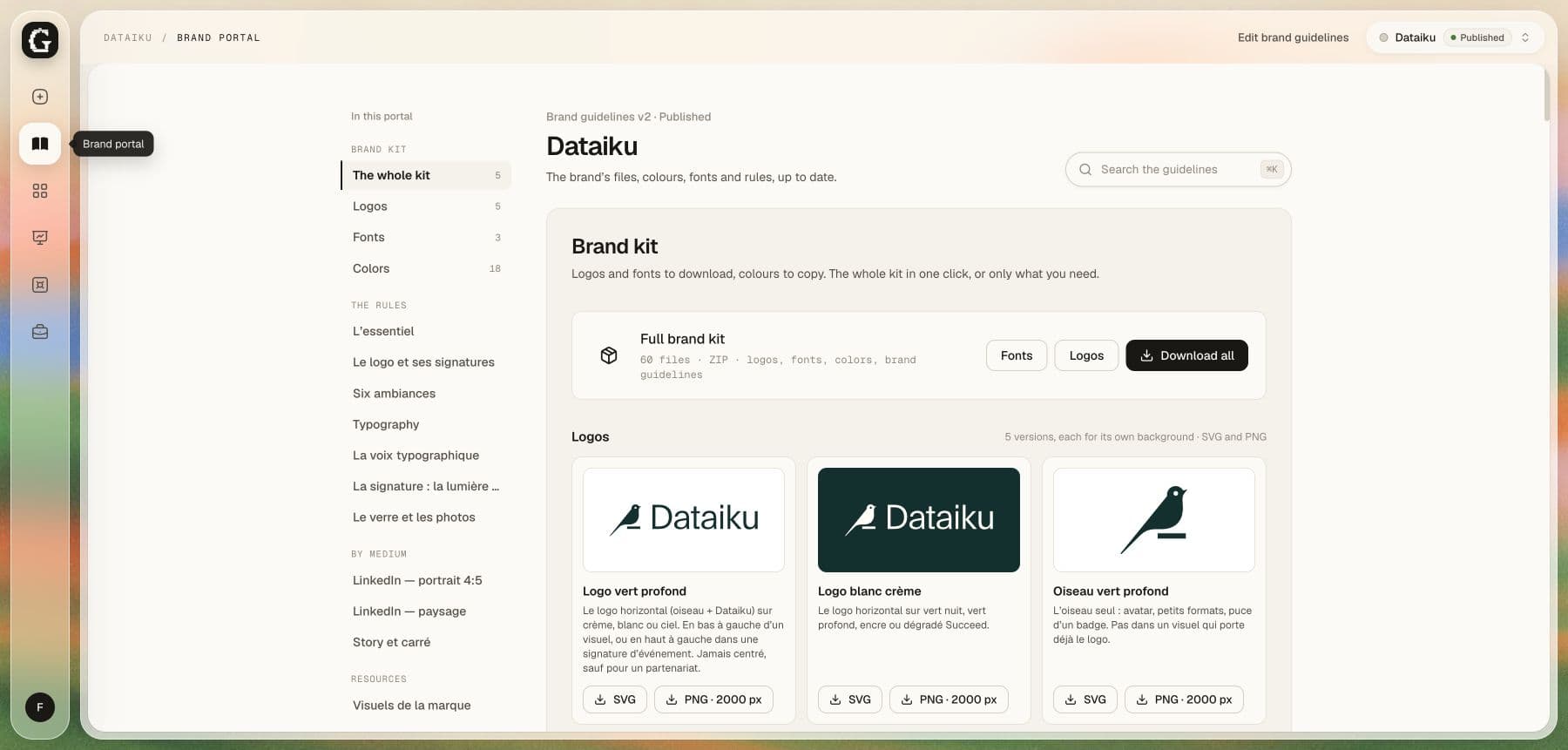
Quality also depends on how people find a file, correct copy and revisit a version. Three choices structure the product.
Logos, fonts, colours, templates and rules live in one place. The portal helps people find resources; the workspace uses them to compose.
Templates use the typefaces, colours and components in this library.
Users can request a revision, edit text directly, compare versions and save their preferred options.
The choice: bring the assistant and editing into one workspace to keep control over the composition.
The creative experience stays familiar across brands. The files, templates and rules unique to each identity are what change.
The choice: evolve one product without rebuilding a tool for every new brand.
“The platform for AI success.” An initial dark composition sets out the message and Dataiku signature. The “White theme” edit explores a different mood while keeping the content and hierarchy.


Two 1,080 × 1,350 pixel PNG exports from the same creation in Graphist. The history preserves the first direction as the next takes shape.
A creation using Dataiku’s identity, shown here to illustrate how Graphist works.
I work on Graphist’s interfaces, templates and creation workflow. The example shown here follows a piece of content from its first version through a revision and exports. The product is in development.